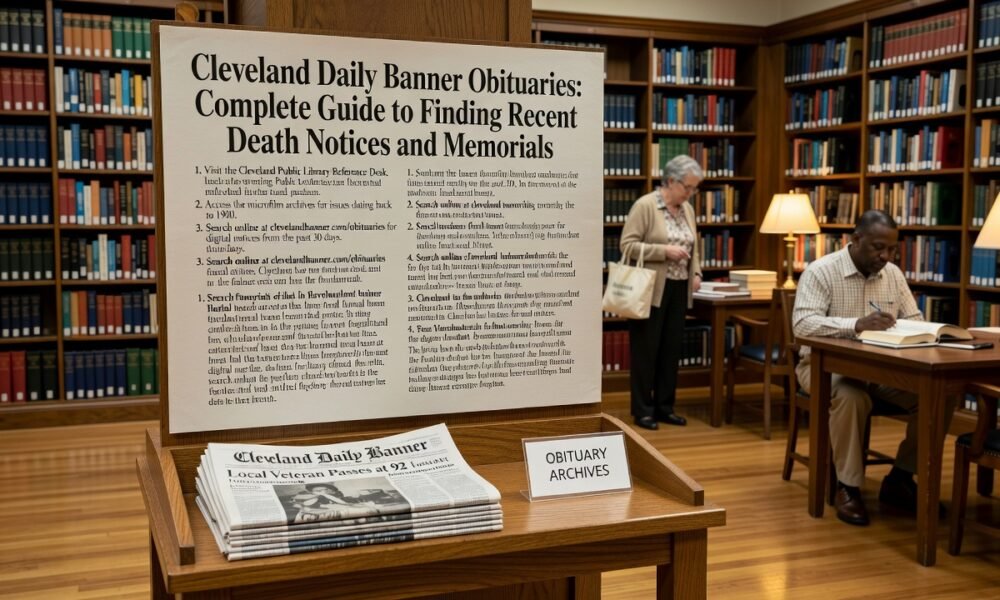
The Cleveland Daily Banner Obituaries section serves as an important resource for families, friends, historians, and community members seeking information about individuals who have passed away in Cleveland, Tennessee, and the surrounding Bradley County area. Obituaries are much more than announcements of a person’s passing—they celebrate lives, preserve family histories, and provide details about funeral services, memorial gatherings, charitable donations, and surviving relatives. Many people visit obituary pages to pay their respects, reconnect with extended family, conduct genealogy research, or learn about members of their local community.
As newspapers have expanded their digital presence, accessing obituary records has become easier than ever. Instead of searching through printed newspapers, readers can browse online archives, search by name, date, or location, and often leave messages of sympathy for grieving families. Whether you are searching for a recent obituary, researching your family’s history, or simply learning how obituary archives work, understanding how the Cleveland Daily Banner obituary section is organized can save time while helping you locate accurate and meaningful information. This guide explains everything you need to know about finding, understanding, and using Cleveland Daily Banner obituaries.
What Are Cleveland Daily Banner Obituaries?
The obituary section published by the Cleveland Daily Banner provides public notices announcing the passing of community members. Each obituary typically contains essential information about the deceased, including their full name, age, date of death, place of residence, and details regarding funeral or memorial services. Many notices also include a summary of the individual’s life, educational background, career accomplishments, military service, hobbies, volunteer work, religious involvement, and the family members they leave behind.
Obituaries perform an important social function by informing the community while preserving a permanent historical record. Families often work closely with funeral homes and newspaper staff to ensure that personal details are accurate and respectfully presented. Over time, these published notices become valuable records for historians, genealogists, and future generations seeking to understand their family heritage.
Why People Search Cleveland Daily Banner Obituaries
People search obituary records for many reasons beyond learning about a recent passing. Family members may wish to confirm funeral arrangements, reconnect with distant relatives, or preserve important family information. Friends often search to leave online condolences or send flowers in memory of someone they knew. Researchers frequently use obituary archives to verify birth dates, marriage information, occupations, military service, and family relationships.
Genealogists especially value newspaper obituaries because they often contain details unavailable in official government records. A single obituary can reveal several generations of family members, helping researchers build more accurate family trees and historical timelines.
Information Commonly Included in an Obituary
A well-written obituary provides a respectful summary of a person’s life and accomplishments. Most Cleveland Daily Banner obituaries include the deceased’s full legal name, age, city of residence, date of death, funeral service information, visitation schedule, burial location, surviving family members, and a brief biography describing important milestones throughout life.
Many families also choose to include personal stories highlighting hobbies, volunteer work, religious faith, favorite activities, career achievements, military service, educational accomplishments, and memorable personality traits. These details transform an obituary from a simple death notice into a meaningful tribute celebrating a lifetime of memories.
Benefits of Online Obituary Archives
The transition from print newspapers to online archives has greatly improved accessibility. Readers can search obituary databases at any time without visiting a physical library or purchasing older newspaper editions. Digital archives often allow searches using names, publication dates, or locations, making it much easier to locate specific records.
Online memorial pages also give friends and relatives opportunities to share condolences, upload photographs, and celebrate the life of the deceased. These interactive features help preserve memories for future generations while allowing people from around the world to participate in honoring loved ones.
Using Obituaries for Genealogy Research
Genealogy researchers frequently rely on obituary archives because they contain rich historical information. Unlike official death certificates, obituaries often list parents, siblings, spouses, children, grandchildren, occupations, military service, churches, schools, and civic organizations. These details help researchers connect family branches that might otherwise remain undiscovered.
By comparing obituary information with census records, cemetery records, marriage licenses, military documents, and birth certificates, researchers can create a much more complete family history.
Preserving Local History
Local newspapers play an important role in preserving community history. Every obituary documents another chapter in the story of a city and its residents. Over decades, obituary collections become valuable historical archives reflecting changing communities, traditions, occupations, and family connections throughout Bradley County and surrounding areas.
Students, historians, journalists, and researchers often use obituary archives to understand demographic changes, local leadership, community organizations, and significant historical events that shaped the region.
Tips for Finding an Obituary Quickly
When searching for an obituary, begin with the person’s complete name and approximate date of death. Including the city or county can help narrow the results if the name is common. If an exact date is unknown, searching within a broader time frame or checking nearby funeral home listings may help. Having additional information such as a spouse’s name, occupation, or age can also improve search accuracy.
Conclusion
The Cleveland Daily Banner Obituaries section is an invaluable resource for anyone seeking recent death notices, memorial information, or historical family records. Beyond announcing a passing, obituaries celebrate lives, preserve community history, and provide meaningful connections between generations. Whether you are searching for a loved one, conducting genealogy research, or learning more about the history of Cleveland and Bradley County, obituary archives offer reliable and lasting information that continues to serve families and researchers alike. Understanding how these records are organized and used allows readers to locate information more efficiently while appreciating the important role local newspapers play in documenting community life.
Frequently Asked Questions (FAQ)
1. What are Cleveland Daily Banner obituaries?
They are published notices announcing the deaths of individuals in Cleveland, Tennessee, and nearby communities, often including biographical information and funeral arrangements.
2. Can I search older Cleveland Daily Banner obituaries?
Yes. Many newspapers maintain searchable archives, and libraries or genealogy services may also provide access to historical obituary records.
3. What information is included in an obituary?
Most obituaries include the person’s name, age, date of death, funeral details, family members, and a summary of their life and accomplishments.
4. Why are obituaries useful for genealogy?
They often include family relationships, occupations, military service, and other details that help researchers build accurate family trees.
5. How can I find a specific obituary?
Search using the person’s full name, approximate date of death, and location. Additional details such as relatives’ names can help refine results.
6. Are obituary archives important for local history?
Yes. They preserve records of community members and provide valuable historical information for researchers, historians, and future generations.