gaming
Games Booklet: The Ultimate Guide to Fun, Educational, and Printable Games

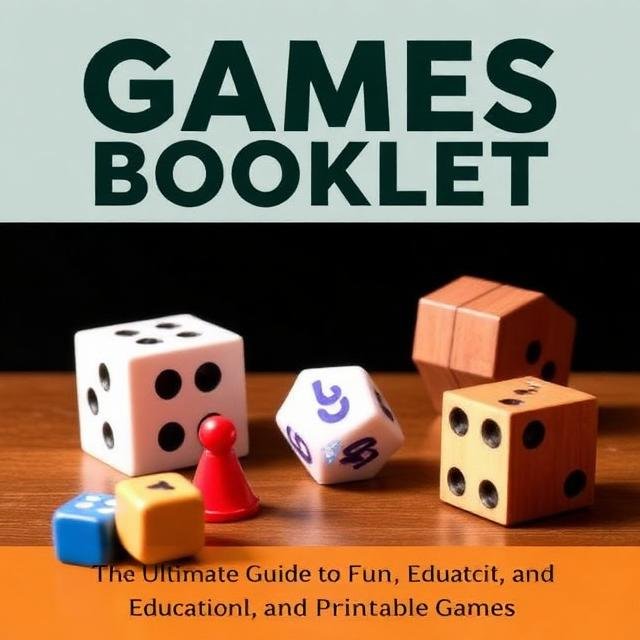
A games booklet is a simple but powerful way to bring together a collection of entertaining, creative, educational, and interactive activities in one convenient place. Whether it is designed for children, families, students, teachers, travelers, party guests, or anyone who enjoys solving puzzles and playing games, a well-created games booklet can provide hours of fun without requiring complicated equipment or expensive technology. From word searches and crosswords to mazes, quizzes, coloring activities, riddles, matching games, number challenges, and creative thinking exercises, a games booklet can include many different types of activities designed for different ages and interests. Because these booklets are often easy to print, carry, share, and customize, they have become a popular resource for homes, classrooms, parties, road trips, waiting rooms, and educational programs.
The best thing about a games booklet is its flexibility. A booklet can be created around almost any theme, including animals, sports, holidays, science, history, fantasy, travel, mathematics, language learning, or general entertainment. Parents can use a games booklet for kids to keep children engaged during weekends, vacations, or long journeys, while teachers can use an educational games booklet to make classroom learning more interactive and enjoyable. Adults can also enjoy challenging puzzles, trivia questions, logic games, and brain teasers. A thoughtfully designed booklet does more than simply fill empty time; it encourages concentration, creativity, problem-solving, memory, communication, and independent thinking. This makes a games booklet both an entertaining activity and a useful learning resource.
What Is a Games Booklet?
A games booklet is a small collection of games and activities organized into a printed or digital booklet. Unlike a single game, a booklet can contain many different activities, giving readers a variety of options to enjoy. One page might include a word search, another might contain a maze, while later pages could feature trivia questions, riddles, matching challenges, drawing activities, or logic puzzles. This variety is one of the main reasons games booklets are so popular, because users do not have to repeat the same activity when they want something new to do.
A games booklet can be created for a specific age group or purpose. For example, a preschool booklet might include simple coloring pages, picture matching, counting games, and easy mazes. A booklet for elementary school students could include spelling games, mathematics challenges, crossword puzzles, and educational quizzes. Teenagers and adults might prefer more difficult logic puzzles, trivia, word games, brain teasers, and strategy activities. The format can also be customized for special occasions, such as birthday parties, weddings, school events, holidays, camps, corporate activities, or community programs.
Why Are Games Booklets So Popular?
Games booklets are popular because they combine convenience, variety, and entertainment in a format that is easy to use. A person can print a booklet at home, place it in a backpack, and use it whenever an activity is needed. Unlike many digital games, a printed game activity booklet does not require a battery, internet connection, or electronic device. This makes it especially useful during travel, classroom activities, family gatherings, and situations where people want to reduce screen time.
Another reason games booklets are valuable is that they can serve multiple purposes at the same time. A child may enjoy a puzzle as entertainment while also practicing reading, spelling, counting, memory, or problem-solving skills. A teacher may use a classroom games booklet as a fun activity after a lesson or as an educational resource for students who finish their work early. Families can use a games booklet to spend quality time together by solving challenges, answering trivia questions, or competing in friendly games. Because the activities can be adapted to different needs, a single booklet can be useful in many different environments.
Games Booklet for Kids
A games booklet for kids should be colorful, engaging, easy to understand, and appropriate for the child’s age. Young children often enjoy activities that use pictures, simple instructions, large letters, and familiar themes. Animal games, coloring challenges, simple mazes, matching activities, counting exercises, and spot-the-difference puzzles can make a booklet exciting for younger children. These activities can help children develop important skills while keeping the learning process enjoyable and interactive.
For older children, a booklet can include more challenging activities that encourage logical thinking and creativity. Word searches, crossword puzzles, trivia questions, math games, riddles, code-breaking challenges, and writing prompts can all be included. The goal is to create activities that are challenging enough to be interesting without becoming so difficult that children lose motivation. A well-designed games booklet should offer a mixture of easy, medium, and difficult activities so children can build confidence while gradually improving their skills.
Educational Games Booklet for Learning
An educational games booklet can transform traditional learning into a more enjoyable experience. Children often learn more effectively when they are actively involved in an activity instead of simply reading information or listening to a lecture. Games can encourage students to think, make decisions, remember information, solve problems, and apply what they have learned. This makes a games booklet a valuable addition to both classroom and home education.
For example, a language-learning booklet might include vocabulary matching, word scrambles, spelling challenges, and sentence-building games. A mathematics booklet could include number puzzles, addition and subtraction challenges, multiplication games, logic problems, and pattern activities. A science-themed booklet might contain quizzes, labeling exercises, observation challenges, and fascinating fact-based games. By connecting educational content with fun activities, a booklet can make learning feel less like a traditional assignment and more like an enjoyable challenge.
Popular Activities to Include in a Games Booklet
A successful games booklet usually includes a variety of activities so readers can choose something that matches their interests. Word searches are one of the most popular choices because they are simple to understand and can be created around almost any theme. Crossword puzzles provide a greater challenge and are excellent for vocabulary development and general knowledge. Mazes encourage concentration and visual problem-solving, while matching games can help younger children develop memory and recognition skills.
Trivia questions are another excellent addition because they can be customized for almost any audience. A children’s booklet might include questions about animals, cartoons, nature, or school subjects, while an adult booklet could include questions about history, movies, sports, geography, science, or popular culture. Riddles and brain teasers can also make a booklet more exciting because they encourage readers to think creatively and look at problems from different perspectives.
Creative activities are equally important. Drawing prompts, coloring pages, storytelling challenges, design activities, and “finish the picture” exercises allow users to express themselves. A well-rounded booklet should not focus only on competition or correct answers. Including creative activities gives users the opportunity to relax, imagine, and enjoy the experience in their own unique way.
Printable Games Booklet Ideas
A printable games booklet can be designed for almost any situation. For a family road trip, the booklet might include travel bingo, car-spotting challenges, word games, drawing activities, and trivia. For a birthday party, it could include themed quizzes, scavenger hunt clues, word searches, coloring pages, and group challenges. A classroom booklet might contain educational puzzles related to the current lesson, while a holiday booklet could include seasonal games and themed activities.
One of the biggest advantages of printable booklets is that they can be customized. Users can choose the number of pages, the difficulty level, the theme, and the types of activities they want to include. A teacher may create different versions for different student groups, while parents can choose games that match their children’s interests. This flexibility makes printable games booklets useful for both personal and professional purposes.
How to Create a Great Games Booklet
Creating a great games booklet begins with understanding the audience. Before choosing activities, consider who will use the booklet and what they are likely to enjoy. A booklet for preschool children should not contain the same level of difficulty as one designed for adults. Similarly, a classroom booklet should support the educational goals of the students, while a party booklet should focus on social interaction and entertainment.
The next step is choosing a clear theme. A strong theme makes the booklet feel more organized and engaging. For example, an animal-themed booklet might include animal trivia, animal word searches, drawing activities, and matching games. A space-themed booklet could feature planets, astronauts, stars, and science-based puzzles. The theme should appear consistently throughout the pages so that the booklet feels like one complete experience rather than a random collection of unrelated activities.
It is also important to include variety. Even the most enjoyable activity can become repetitive if it appears too many times. A good booklet should combine different types of games, such as puzzles, quizzes, creative tasks, visual challenges, and word activities. Difficulty should also be balanced. Including a few easy activities helps users feel successful, while more challenging games provide a sense of achievement when completed.
Clear instructions are another essential part of a successful game activity booklet. Every activity should explain what the user needs to do in simple language. If a game has special rules, those rules should be explained before the activity begins. Confusing instructions can quickly reduce enjoyment, especially for younger children. Good organization, readable text, suitable spacing, and attractive page design can make the entire booklet easier and more enjoyable to use.
Games Booklet for Classrooms
Teachers can use a classroom games booklet in many creative ways. It can be used as an independent activity, a group exercise, a reward, a review tool, or a lesson supplement. For example, after teaching a vocabulary lesson, students could complete a word puzzle using the new words they have learned. After a science lesson, students might solve a quiz or complete a themed challenge based on the topic.
Games booklets can also support different learning styles. Some students enjoy written challenges, while others prefer visual activities or group games. By including different types of tasks, teachers can create a more inclusive learning experience. A booklet can also be useful during school trips, rainy-day activities, substitute lessons, or special classroom events. When carefully planned, games can support learning while creating a more relaxed and enjoyable classroom atmosphere.
Family Entertainment with a Games Booklet
A family games booklet can provide an excellent way for parents and children to spend time together. Many families are looking for activities that encourage conversation and interaction without relying entirely on screens. A booklet can provide a simple solution by offering trivia questions, family challenges, drawing games, riddles, and cooperative puzzles.
The activities can be designed for different ages so that everyone can participate. Younger children may enjoy drawing and simple puzzles, while older children and adults can answer more difficult trivia questions or solve logic challenges. The most important goal is to create an enjoyable shared experience. A games booklet does not have to be highly competitive; cooperative activities can be just as entertaining and can encourage communication and teamwork.
Benefits of Using a Games Booklet
One major benefit of a games booklet is that it encourages active thinking. Many games require users to analyze information, remember details, recognize patterns, or develop strategies. These activities can support cognitive development and help people practice skills in an enjoyable way. For children, games can also encourage patience and persistence because some puzzles require several attempts before they are solved.
Games booklets can also encourage creativity. Drawing prompts, storytelling activities, design challenges, and imaginative games give users the freedom to create something original. Creativity is an important skill that extends beyond entertainment and can support communication, problem-solving, and confidence.
Another benefit is flexibility. A games booklet can be used at home, at school, during travel, at parties, or during community events. It can be printed in different formats and adapted for different audiences. Because it is easy to carry and share, it can provide entertainment in many situations where other activities may not be practical.
Tips for Designing an Engaging Games Booklet
When designing a games booklet, presentation matters. A clean layout makes the pages easier to read and helps users understand each activity. Titles should be clear, instructions should be easy to follow, and there should be enough space for writing or drawing. If the booklet is designed for children, visual elements and friendly themes can make it more attractive.
It is also important to test the games before publishing or printing the booklet. Try completing the activities yourself or ask someone from the target age group to test them. This can reveal unclear instructions, incorrect answers, overly difficult puzzles, or design problems. Testing helps ensure that the final booklet provides a smooth and enjoyable experience.
Frequently Asked Questions About Games Booklets
What is a games booklet?
A games booklet is a collection of games and activities organized into a printed or digital booklet. It may include puzzles, quizzes, word games, mazes, coloring activities, riddles, trivia, and educational challenges.
Who can use a games booklet?
Almost anyone can use a games booklet. Children, students, teachers, families, adults, travelers, and party guests can all enjoy booklets designed for their specific interests and age groups.
What can be included in a printable games booklet?
A printable games booklet can include word searches, crossword puzzles, mazes, trivia questions, riddles, matching games, coloring pages, drawing challenges, math activities, quizzes, and many other types of games.
Are games booklets educational?
Yes, many games booklets are designed specifically for learning. Educational games can help develop vocabulary, mathematics skills, memory, concentration, problem-solving, creativity, and general knowledge.
How do I make a games booklet for kids?
Start by choosing an age-appropriate theme and selecting activities that match the children’s abilities. Include a mixture of simple and challenging games, use clear instructions, and create an attractive layout that is easy for children to understand.
Can a games booklet be used in the classroom?
Yes. Teachers can use classroom games booklets for lesson reviews, independent activities, group challenges, educational practice, rewards, and special events.
What makes a games booklet successful?
A successful games booklet offers variety, clear instructions, attractive organization, suitable difficulty, and activities that match the interests and abilities of its intended audience.
Conclusion
A games booklet is an excellent way to combine entertainment, learning, creativity, and social interaction in one convenient resource. Whether you are creating a printable games booklet for children, an educational games booklet for a classroom, a family activity booklet for home use, or a themed collection of puzzles for a special event, the possibilities are almost unlimited. The best booklets offer a variety of activities that keep users interested while encouraging valuable skills such as concentration, problem-solving, memory, creativity, and communication.
With thoughtful planning, a clear theme, age-appropriate activities, and easy-to-follow instructions, anyone can create a useful and enjoyable game activity booklet. From simple puzzles and coloring pages to challenging quizzes and brain teasers, a well-designed games booklet can provide meaningful entertainment for people of all ages. As people continue to look for creative activities that are easy to use and share, games booklets remain a practical, flexible, and enjoyable choice for learning and fun.

The phrase “guilty as sock” is an unusual expression that can immediately make people curious. It sounds humorous, memorable, and slightly unexpected because the word sock is not normally associated with guilt, wrongdoing, or responsibility. When people encounter this phrase online, in a conversation, in a social media post, or as part of a creative title, they may wonder whether it is an established idiom, a playful variation of another saying, a modern internet expression, or a phrase created for entertainment. Understanding the meaning of a phrase like “guilty as sock” requires more than looking at the individual words. It is important to consider context, tone, intended humor, and the way language changes through online communities and popular culture.
Language is constantly developing. New expressions appear through jokes, memes, social media, entertainment, regional speech, and creative wordplay. Some phrases become widely accepted, while others remain niche or are mainly used within a particular community. “Guilty as sock” stands out because it combines the serious idea of guilt with an ordinary household object. That contrast can make the phrase amusing and easy to remember. In many cases, unusual wording is intentionally designed to attract attention, create curiosity, or add a playful tone to a situation. This guide explores the possible meaning of “guilty as sock,” explains how unusual phrases gain popularity, provides examples of how the expression may be used, and discusses why context is essential when interpreting modern language.
What Does “Guilty as Sock” Mean?
The meaning of “guilty as sock” may depend heavily on the context in which the phrase appears. It does not appear to function as a traditional, widely established English idiom in the same way as expressions such as “guilty as sin.” Because of that, readers should avoid assuming that it has one fixed dictionary definition. It may be a humorous alteration, a typo, a creative phrase, a character name, a title, or a piece of online wordplay. The phrase can communicate the general idea that someone appears obviously guilty, but the unusual use of sock adds a comic or exaggerated effect.
For example, someone might say, “He looked guilty as sock when everyone asked who ate the last cookie.” In this situation, the phrase would probably be understood through the surrounding sentence. The speaker is not making a literal comparison between guilt and a sock. Instead, the unexpected wording creates humor and emphasizes that the person looked suspicious. The phrase may also be used as a playful substitute for a more familiar expression, especially when someone wants to make a sentence sound less serious or more entertaining.
The phrase can also have a specific meaning if it is connected to a particular online account, video, game, fictional character, product, or community. In such cases, the surrounding source is more important than the words alone. A title or name can develop its own identity over time, and people may search for it because they recognize it from a particular piece of content. Therefore, anyone researching “guilty as sock” should examine where the phrase was found before deciding what it means.
Is “Guilty as Sock” a Common English Expression?
“Guilty as sock” is not generally recognized as a standard English idiom with a long-established definition. Traditional idioms usually develop through repeated use over many years and become familiar to large groups of speakers. Their meanings may not be obvious from the individual words. For example, expressions such as “spill the beans” or “break the ice” have meanings that are understood through common usage rather than literal interpretation. “Guilty as sock,” by comparison, appears unusual and may be a modern, creative, or context-specific expression.
However, the fact that a phrase is not a traditional idiom does not mean it is meaningless. Language is flexible, and people regularly create new expressions. A phrase can become understandable when its context makes the intended meaning clear. Humorous language often works by changing one word in a familiar expression. The audience recognizes the original pattern but notices the unexpected replacement, creating surprise or comedy. If “guilty as sock” is being used in this way, its value may come from sounding deliberately strange rather than following a formal linguistic rule.
Online communication has made this type of language more common. People frequently create unusual phrases to make posts memorable, develop a unique identity, or encourage others to share and discuss the content. A phrase may become popular because it is funny, confusing, catchy, or easy to turn into a meme. As a result, modern search terms sometimes represent emerging language rather than established dictionary expressions.
Possible Origin of the Phrase “Guilty as Sock”
The exact origin of “guilty as sock” may be difficult to identify without knowing the original source. The phrase could have emerged from a typo, a humorous rewrite, a social media post, a fictional work, a username, or a creative title. Internet language often develops quickly, and a phrase can spread before its original creator or first use is clearly documented. This makes it important to distinguish between confirmed history and possible explanations.
One possibility is that “guilty as sock” is a playful modification of a more familiar phrase involving guilt. English speakers often use exaggerated comparisons to describe someone who looks obviously responsible for something. A creative speaker may replace the expected final word with an unrelated object to make the sentence sound funny. The humor comes from the contrast between the serious concept of guilt and the ordinary, harmless image of a sock. This kind of word substitution is common in jokes and casual online communication.
Another possibility is that the phrase has a specific connection to a particular creator, character, or piece of media. If that is the case, the phrase may have a meaning that cannot be understood through general English alone. It could represent a brand identity, a running joke, or a recognizable reference within a community. The most accurate interpretation would then come from the original content rather than from general language rules. Before presenting a specific origin as fact, writers should verify the source and avoid creating unsupported explanations.
Why Unusual Phrases Become Popular Online
Unusual phrases often attract attention because they interrupt normal expectations. When people read a familiar word such as guilty, they may expect the rest of the sentence to follow a common pattern. The unexpected appearance of sock creates curiosity and encourages the reader to ask questions. That curiosity can increase engagement because people may search for the phrase, discuss it with others, or share it on social media.
Memorability is another reason unusual expressions can spread. A simple and strange phrase is often easier to remember than a long, ordinary sentence. The contrast between the words can create a strong mental image, even when the phrase is not meant literally. A person may remember “guilty as sock” because the combination sounds unusual, humorous, or distinctive. This can be useful for creators who want a title, character, or online identity to stand out.
Modern internet culture also rewards originality. Users often create new expressions to communicate personality and build a sense of community. A phrase can become a shared reference among followers, friends, or fans. Once a group understands the joke, repeating the phrase can create a feeling of belonging. Over time, the expression may move beyond its original audience and become a broader search term.
How to Use “Guilty as Sock” in a Sentence
Because “guilty as sock” is not a standard idiom with strict usage rules, the best approach is to use it in a context that makes the intended meaning clear. It works most naturally in humorous, informal, or creative writing. The surrounding sentence should explain the situation so readers understand that the phrase is being used playfully.
Here are several examples:
- “When Mom asked who broke the vase, Ali looked guilty as sock.”
- “The cat sat beside the torn curtain and looked guilty as sock.”
- “He tried to hide the empty cookie box, but he looked guilty as sock.”
- “Everyone knew she had planned the surprise because she was smiling guilty as sock.”
- “The character’s guilty-as-sock expression made the audience laugh.”
These examples show how the phrase can be used to describe someone who appears suspicious or obviously responsible for a small action. The phrase is especially suitable for lighthearted situations. It may not be appropriate in formal writing, legal discussions, professional reports, or serious accusations because its humorous and nonstandard wording can make the message unclear.
The Difference Between “Guilty as Sock” and “Guilty as Sin”
The expression “guilty as sin” is a familiar English phrase used to describe someone who appears extremely or obviously guilty. It is an established comparison, and many English speakers understand its meaning immediately. The word sin strengthens the idea of wrongdoing because it has strong moral and religious associations. The phrase is therefore used as an exaggeration to suggest that a person’s guilt is very clear.
“Guilty as sock,” on the other hand, replaces the expected serious comparison with an ordinary object. This creates a very different tone. A sock does not naturally represent guilt, wrongdoing, or moral responsibility. The phrase may therefore sound humorous, absurd, or intentionally random. Instead of increasing the seriousness of the accusation, it can make the situation feel playful.
The difference demonstrates how changing one word can transform the tone of a sentence. Traditional expressions often depend on shared cultural understanding, while creative expressions depend more on surprise and context. A writer who uses “guilty as sock” should understand that some readers may interpret it as a joke, while others may think it is a typo or ask for clarification.
Why Context Is Important When Understanding “Guilty as Sock”
Context is essential when interpreting any unusual phrase. The same words can have different meanings depending on where they appear. If “guilty as sock” is used in a humorous social media caption, it may simply be a joke. If it appears as the title of a video, game, or creative project, it may be a proper name. If it is part of a conversation, the speaker’s tone and the surrounding situation may explain the intended meaning.
Readers should consider several questions when they encounter the phrase. Where was it used? Was it connected to a person, character, website, or piece of media? Was the content serious or humorous? Did the author explain the phrase elsewhere? These details can help determine whether the phrase has a specific meaning or is simply creative wordplay.
Context also prevents misinformation. It can be tempting to assign a detailed origin or hidden meaning to an unusual phrase, but unsupported explanations may confuse readers. A strong article should separate confirmed information from interpretation. When the origin is uncertain, it is better to use careful wording such as “may be,” “could be,” or “appears to be.” This approach improves accuracy and builds trust.
Can “Guilty as Sock” Be Used in Creative Writing?
“Guilty as sock” can be useful in creative writing because it has a distinctive sound and can add personality to dialogue. Children’s stories, comedy scripts, cartoons, social media captions, and lighthearted blog posts may benefit from unusual expressions. A creative phrase can help a character sound unique and make dialogue more memorable.
For example, a funny detective character might say, “That cookie thief looks guilty as sock!” The unusual wording could become part of the character’s personality. If repeated carefully, it may develop into a recognizable catchphrase. Writers can use this technique to create humor and make fictional characters easier to remember.
The phrase can also work as a title if the content is playful or mysterious. A title such as Guilty as Sock: The Missing Cookie Mystery could attract attention because it combines humor with a question. However, writers should ensure that the title matches the content. A strange title may generate curiosity, but the article, story, or video still needs to explain the topic and provide value.
SEO Considerations for the Keyword “Guilty as Sock”
When creating an SEO article around the keyword “guilty as sock,” it is important to write for readers rather than repeating the phrase excessively. Search engines generally evaluate content based on usefulness, relevance, clarity, structure, and the overall quality of information. Repeating the exact keyword in every paragraph can make the article sound unnatural and may reduce the reading experience.
A stronger SEO strategy is to use relevant keyword variations naturally. Examples include:
- guilty as sock meaning
- what does guilty as sock mean
- guilty as sock explained
- guilty as sock origin
- guilty as sock phrase
- guilty as sock examples
- how to use guilty as sock
- guilty as sock definition
These related terms can be placed in headings, subheadings, introductory paragraphs, image descriptions, and FAQ sections when they fit naturally. The article should also answer the questions that users are likely to ask. Clear headings and detailed explanations make the content easier to scan and understand.
Internal links can improve the user experience when they connect the article to relevant topics such as English idioms, internet slang, creative writing, language trends, or popular online expressions. External references should be used carefully and should support factual claims. If the phrase is connected to a specific source, the article should identify that source accurately rather than presenting assumptions as facts.
Common Mistakes to Avoid When Writing About “Guilty as Sock”
One common mistake is claiming that “guilty as sock” is an ancient or traditional English idiom without reliable evidence. Unusual search terms often encourage writers to create a detailed history even when the origin is uncertain. This can lead to inaccurate information. A better approach is to explain what is known, describe possible interpretations, and clearly identify uncertainty.
Another mistake is treating the phrase as if it always has the same meaning. If the term is connected to a specific online community, creator, or fictional work, its meaning may differ from its general interpretation. Writers should examine the source before publishing a definitive explanation.
Keyword stuffing is also a problem. Repeating “guilty as sock” too often can make the article difficult to read. The keyword should appear naturally in important areas, but the main focus should remain on helpful information. Search-friendly content is not simply content with many keywords. It is content that answers the reader’s question clearly and provides useful context.
Finally, writers should avoid using the phrase in serious situations where humor may be misunderstood. The expression is better suited to informal, playful, or creative communication. Formal writing usually requires direct and precise language.
Conclusion
“Guilty as sock” is an interesting phrase because it combines a serious idea with an unexpected everyday object. Although it is not generally recognized as a traditional English idiom with a fixed definition, it may be understood as humorous wordplay, a creative variation, a context-specific reference, or a memorable online expression. Its meaning depends greatly on where and how it is used. In a playful sentence, it may describe someone who looks obviously suspicious, while in a title or online community, it could have a more specific meaning connected to its original source.
The popularity of unusual expressions shows how quickly language can change. Social media, entertainment, memes, and online communities allow new phrases to spread rapidly. Some become common expressions, while others remain connected to a particular group or piece of content. For writers and content creators, “guilty as sock” provides an opportunity to discuss language, humor, creativity, and the importance of context. The best way to explain the phrase is to remain accurate, avoid unsupported claims, and give readers enough information to understand how the expression may be interpreted.
Frequently Asked Questions About Guilty as Sock
What does “guilty as sock” mean?
“Guilty as sock” does not have a universally established dictionary meaning. It may be used as humorous or creative wording to suggest that someone looks suspicious or obviously responsible for something. Its exact meaning depends on the context.
Is “guilty as sock” a real English idiom?
It is not generally recognized as a traditional English idiom. It may be a modern expression, a joke, a creative variation, a typo, or a phrase connected to a particular online source.
Is “guilty as sock” the same as “guilty as sin”?
The two phrases may communicate a similar general idea of obvious guilt, but their tones are different. “Guilty as sin” is a familiar expression, while “guilty as sock” sounds unusual and may be intended to be humorous.
Where did the phrase “guilty as sock” come from?
The exact origin may be unclear without identifying the original context. It could have developed through online humor, creative wordplay, a typo, a social media post, or a specific piece of media.
How can I use “guilty as sock” in a sentence?
You can use it in an informal or humorous context. For example: “When everyone asked who ate the cookies, he looked guilty as sock.” The surrounding sentence helps readers understand the intended meaning.
Is “guilty as sock” appropriate for formal writing?
It is usually better suited to casual, humorous, or creative writing. Formal reports, professional documents, and serious discussions should use clearer and more standard language.
Why are unusual phrases popular online?
Unusual phrases can be funny, memorable, and easy to share. Their unexpected wording creates curiosity and may encourage people to search for them, discuss them, or use them in memes and social media content.
Can I use “guilty as sock” as a blog title?
Yes. It can work as a creative title, especially if the article explains the phrase or uses a humorous theme. For SEO, adding descriptive words such as meaning, origin, usage, or explained can make the title clearer to readers and search engines.


 gaming2 months ago
UFC 5 Controls: Complete Beginner and Advanced Guide (PS5 & Xbox)
- Tech2 months ago
Aura Wallpaper: The Ultimate Guide to Beautiful Backgrounds for Every Device (2026)
- gaming2 months ago
r2rtrust.foullrop85j.08.47h Gaming: The Complete Guide for Every Gamer
- Entertainment2 months ago
Figure Skating Milano Cortina 2026: Complete Guide to the Olympic Competition
- Tech2 months ago
YouTube to MP3: The Complete Guide to Safe and High-Quality Audio Conversion
- Tech2 months ago
Jack Swinney OneStaff Medical Email: How to Find the Right Contact Information
- food2 months ago
Unagi: The Complete Guide to Japanese Freshwater Eel, Benefits, Nutrition, and How to Enjoy It
- Entertainment2 months ago
Flix HQ: Everything You Need to Know About the Popular Streaming Platform