scientific
Gravity Points: Complete Guide to Meaning, Uses, and Applications

Published
2 months agoon
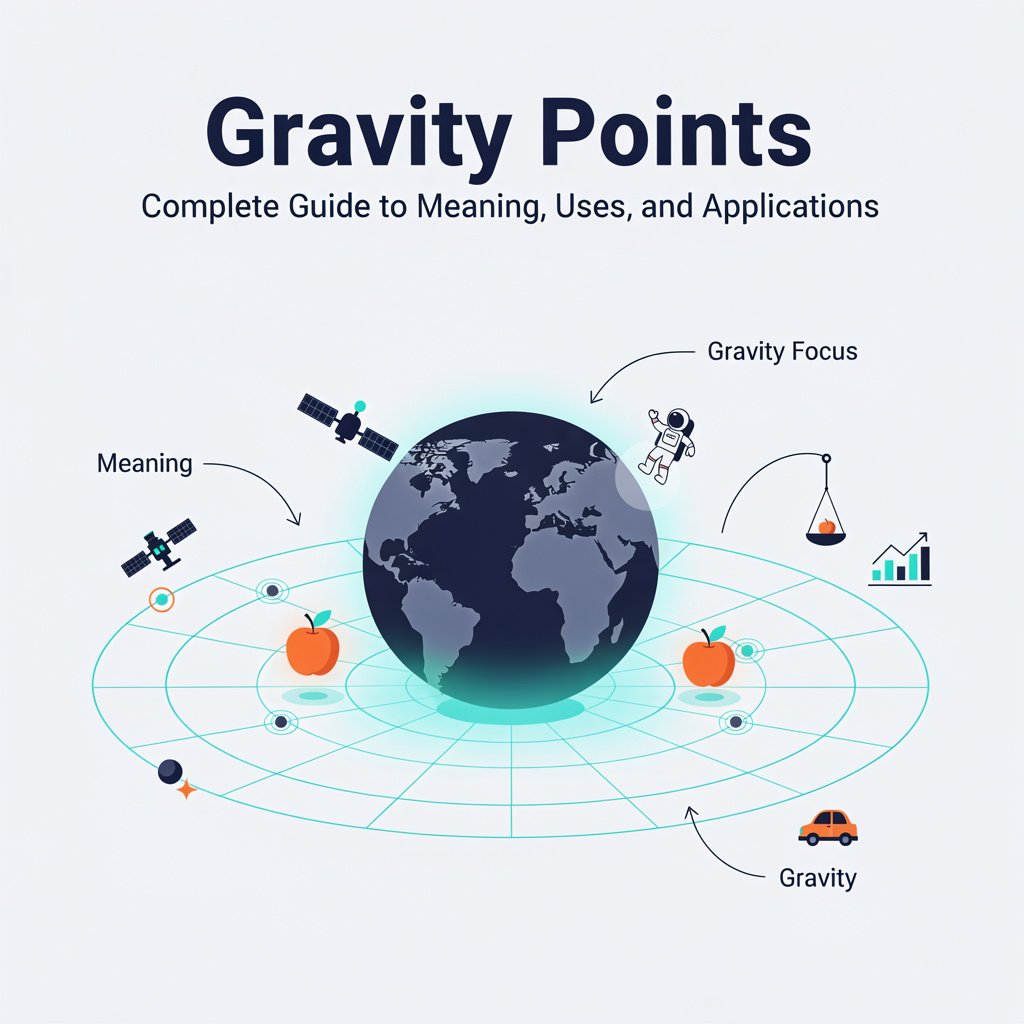
Table of Contents
ToggleGravity is one of the most fundamental forces in the universe, shaping everything from the movement of planets to the way objects fall to the ground. Within discussions about gravity, the term gravity points is often used to describe locations or reference points where gravitational influence is measured, concentrated, or applied depending on the scientific, engineering, gaming, or educational context. Although the meaning can vary slightly across different fields, gravity points generally help explain how gravitational forces affect objects, movement, and interactions. Understanding gravity points provides valuable insight into physics, astronomy, engineering, game development, and even everyday experiences. This comprehensive guide explains what gravity points are, how they work, why they matter, and where they are commonly used.
What Are Gravity Points?
Gravity points are reference locations associated with gravitational force or attraction. In physics, they often represent positions where gravity acts upon an object or where gravitational calculations are centered. For example, when scientists calculate planetary motion, they frequently use the center of mass as the effective gravity point because it simplifies complex calculations. In other contexts, such as video games, gravity points may represent invisible locations that pull characters or objects toward a specific direction, allowing developers to create unique gameplay experiences. Regardless of the application, gravity points serve as essential reference markers that make understanding and modeling gravitational behavior much easier.
How Gravity Points Work
Gravity is a force of attraction between objects with mass. Every object that has mass exerts gravitational force on other objects. Gravity points help identify where this force is considered to originate or where its effects are measured. On Earth, gravity generally pulls everything toward the planet’s center. Although people experience gravity as a downward force, scientists understand that the actual direction points toward Earth’s center of mass. Gravity points become especially important when calculating orbital mechanics, satellite trajectories, structural engineering designs, and simulations used in education and entertainment. These reference points enable precise mathematical models that predict movement accurately.
Gravity Points in Physics
In physics, gravity points are essential for solving problems involving motion and force. Researchers calculate the gravitational attraction between celestial bodies by measuring the distance between their centers of mass, which function as gravity points. This approach simplifies equations while maintaining excellent accuracy. Engineers designing bridges, skyscrapers, aircraft, and spacecraft also rely on gravity-related calculations to ensure structural stability. Understanding where gravitational forces act helps determine balance, stress distribution, and safe operating conditions.
Gravity Points in Astronomy
Astronomy heavily depends on gravity points to understand the behavior of planets, moons, stars, and galaxies. Every celestial body possesses its own center of mass that effectively acts as its gravity point. The Earth’s orbit around the Sun, the Moon’s orbit around Earth, and the complex interactions between galaxies are all governed by gravitational forces calculated using these reference locations. Modern space missions use gravity point calculations to navigate spacecraft with extraordinary precision, reducing fuel consumption while maximizing mission success.
Gravity Points in Gaming
Modern video games often use gravity points as gameplay mechanics. Developers create invisible gravity zones that attract or repel players, vehicles, or objects. Puzzle games, platformers, and science-fiction adventures frequently incorporate multiple gravity points to allow players to walk on walls, jump between planets, or navigate environments where gravity changes direction. These mechanics create engaging experiences while demonstrating creative applications of real-world physics principles.
Gravity Points in Engineering
Engineers consider gravity points during the planning and construction of buildings, bridges, cranes, vehicles, and industrial machinery. Properly understanding gravitational forces helps prevent tipping, collapse, or uneven weight distribution. Designers use computer simulations to evaluate how gravity affects structures under various conditions, improving safety and performance. Gravity point calculations are equally important in robotics, manufacturing equipment, and transportation systems.
Everyday Examples of Gravity Points
Although many people never consciously think about gravity points, they encounter their effects daily. Walking, driving, climbing stairs, carrying heavy objects, and playing sports all involve gravitational forces acting through reference points that determine balance and movement. Even household items such as chairs, tables, and shelves are designed with gravitational stability in mind. Athletes learn to control their body’s center of gravity to improve speed, balance, and performance, demonstrating another practical application of gravity-related concepts.
Benefits of Understanding Gravity Points
Learning about gravity points improves scientific literacy and helps explain many natural phenomena. Students gain a better understanding of physics, while engineers and scientists use gravity point calculations to solve real-world problems. Game developers create immersive environments through gravity mechanics, and educators use practical examples to make complex scientific ideas easier to understand. This knowledge also encourages curiosity about astronomy, space exploration, and technological innovation.
Common Misconceptions
Many people assume gravity points are physical objects or visible locations. In reality, they are usually conceptual reference points used for calculations and analysis. Another misconception is that gravity acts only on large objects, when in fact every object with mass exerts gravitational force, although the effect is often too small to notice. Understanding these concepts helps eliminate confusion and provides a more accurate view of how gravity shapes the universe.
Future Applications of Gravity Points
As technology advances, gravity point modeling continues to improve. Artificial intelligence, advanced simulations, virtual reality, robotics, and space exploration increasingly depend on precise gravitational calculations. Future lunar and Martian missions will require sophisticated gravity models to ensure safe landings, efficient navigation, and successful long-term exploration. Researchers also continue studying gravity to better understand black holes, dark matter, and the structure of the universe.
Conclusion
Gravity points are a valuable concept that helps explain how gravitational forces influence objects, structures, planets, and even virtual worlds. Whether used in physics, astronomy, engineering, education, or gaming, they provide a reliable framework for understanding and calculating gravitational effects. As science and technology continue to evolve, gravity points will remain an essential part of research, innovation, and practical problem-solving. Developing a solid understanding of gravity points not only improves knowledge of physics but also reveals how gravity quietly influences nearly every aspect of our daily lives.
Frequently Asked Questions (FAQs)
1. What are gravity points?
Gravity points are reference locations used to represent where gravitational force acts or is measured in different scientific and technical contexts.
2. Are gravity points real physical objects?
No. They are usually conceptual reference points used for calculations and modeling.
3. Why are gravity points important?
They simplify calculations in physics, astronomy, engineering, and computer simulations while improving accuracy.
4. How are gravity points used in video games?
Game developers use gravity points to create mechanics such as changing gravity directions, planetary movement, and physics-based puzzles.
5. What is the difference between a gravity point and the center of gravity?
A gravity point is a general reference concept, while the center of gravity is the specific point where an object’s weight is considered to act.
6. Where are gravity points used?
They are widely used in physics, astronomy, engineering, architecture, robotics, aerospace, education, and game development.
7. Can understanding gravity points help students?
Yes. It makes gravitational concepts easier to understand and improves knowledge of science and mathematics.
8. Will gravity points become more important in the future?
Yes. As space exploration, robotics, AI, and simulation technologies continue to advance, gravity point calculations will play an even greater role in research and innovation.
You may like
scientific
Simpcit6: Everything You Need to Know About Features, Benefits, Uses, and Future Potential
Published
2 months agoon
July 17, 2026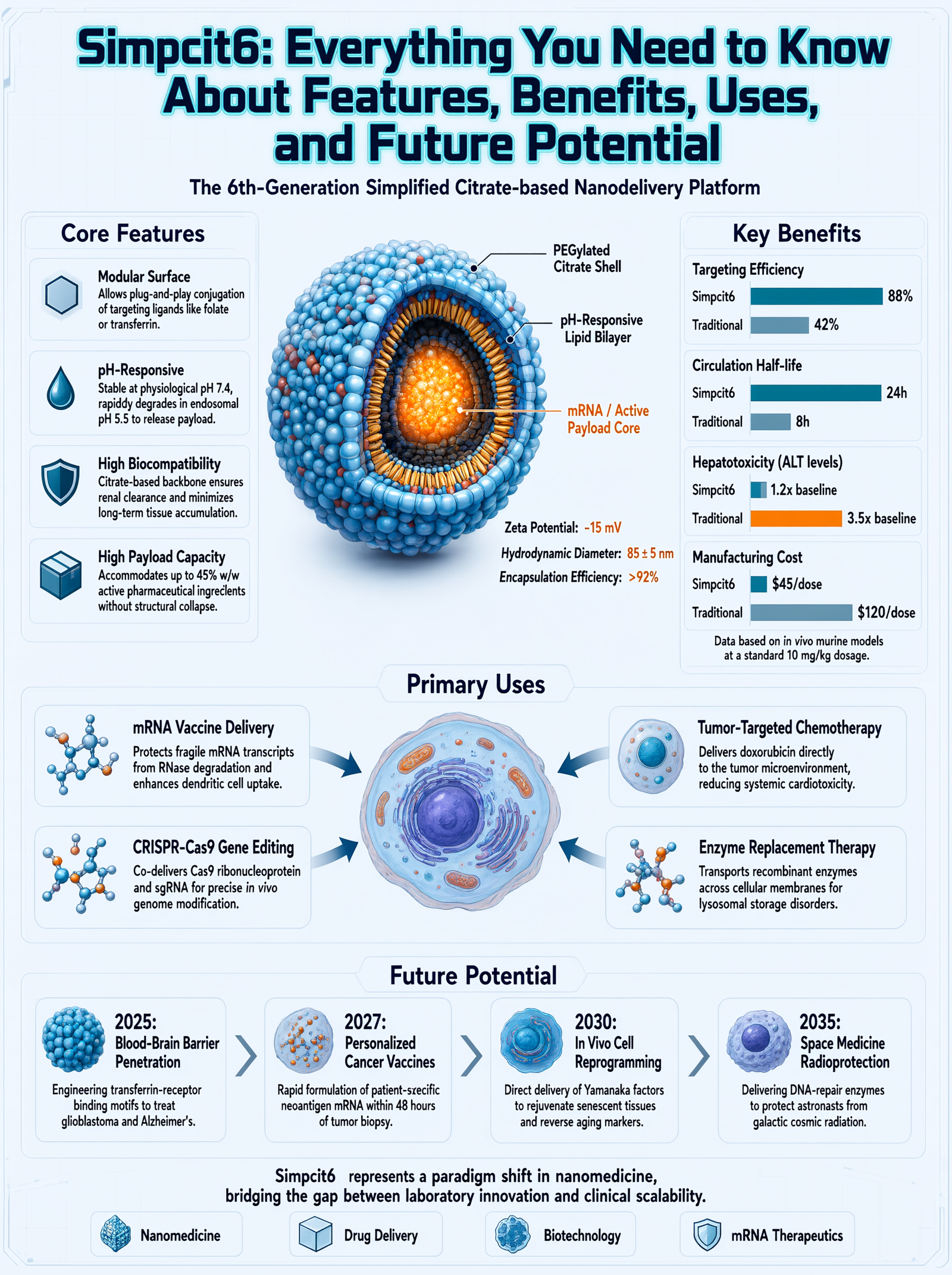
Table of Contents
ToggleTechnology continues to transform the way people work, communicate, and manage digital information, making innovative platforms more valuable than ever. Among the emerging names gaining attention is Simpcit6, a solution designed to simplify workflows, improve efficiency, and help users complete tasks with greater speed and accuracy. Whether you are an individual exploring new digital tools, a business looking for productivity improvements, or simply someone interested in learning about modern technology, understanding what Simpcit6 offers can help you make informed decisions.
As digital solutions become increasingly sophisticated, users often seek platforms that combine simplicity with powerful functionality. Simpcit6 aims to bridge that gap by providing an intuitive experience while offering advanced capabilities that support a wide variety of tasks. From automation and collaboration to organization and performance optimization, the platform is positioned as a flexible solution for users with different needs and experience levels. This comprehensive guide explores every major aspect of Simpcit6, including its features, benefits, applications, advantages, possible limitations, and future potential.
What Is Simpcit6?
Simpcit6 is a modern digital platform designed to simplify complex processes through user-friendly tools and intelligent functionality. Instead of requiring users to learn complicated systems, it focuses on creating an efficient experience where important tasks can be completed quickly and accurately. By reducing unnecessary complexity, Simpcit6 enables individuals and organizations to focus on productivity rather than technical challenges.
The platform is designed with flexibility in mind, making it suitable for beginners as well as experienced professionals. Its adaptable architecture allows it to support different industries, business models, and personal productivity needs. As technology evolves, platforms like Simpcit6 continue to gain popularity because they emphasize both ease of use and scalable performance.
Key Features of Simpcit6
One of the primary reasons Simpcit6 attracts attention is its diverse collection of features. The platform combines usability with functionality, allowing users to accomplish more while spending less time managing complicated systems.
Its intuitive dashboard provides organized navigation that makes accessing important tools straightforward. Advanced automation capabilities reduce repetitive work by streamlining common tasks, while customizable settings allow users to personalize their experience according to specific goals and preferences.
Collaboration tools enable teams to communicate effectively, share information, and coordinate projects efficiently. Security measures help protect sensitive information, giving users confidence that their data remains secure. Cloud integration supports access from multiple devices, allowing users to work from virtually anywhere with an internet connection.
Benefits of Using Simpcit6
One of the greatest advantages of Simpcit6 is improved productivity. By automating repetitive activities and simplifying workflows, users can dedicate more time to meaningful work instead of administrative tasks.
Businesses benefit from greater operational efficiency, while individuals appreciate the platform’s ease of learning. Because Simpcit6 reduces technical barriers, new users can become productive quickly without extensive training.
The platform also supports scalability, meaning it can grow alongside expanding businesses or increasing workloads. This flexibility makes it suitable for startups, small businesses, large organizations, freelancers, educators, and independent professionals.
How Simpcit6 Improves Productivity
Productivity improvements come from eliminating unnecessary complexity. Simpcit6 helps users organize projects, monitor progress, automate routine operations, and centralize information into a single workspace. Instead of switching between multiple applications, users can manage many activities through one integrated platform.
This streamlined workflow minimizes distractions while improving communication, organization, and overall efficiency. Better organization leads to improved decision-making, faster project completion, and reduced operational costs.
Who Should Use Simpcit6?
Simpcit6 is suitable for a wide range of users, including entrepreneurs, business owners, project managers, students, educators, freelancers, marketing professionals, consultants, and technology enthusiasts. Because the platform is designed to accommodate different skill levels, both beginners and experienced users can benefit from its functionality.
Organizations seeking digital transformation may also find Simpcit6 useful because it promotes collaboration, automation, and workflow optimization without requiring highly specialized technical expertise.
Best Practices for Getting Started with Simpcit6
To maximize the value of Simpcit6, users should begin by identifying their primary objectives and configuring the platform accordingly. Spending time customizing dashboards, organizing projects, and exploring automation options can significantly improve efficiency over time.
Regularly reviewing workflows helps identify opportunities for further optimization. Taking advantage of collaboration features ensures that team members remain aligned, while maintaining updated security settings helps protect valuable information.
Future Potential of Simpcit6
As technology continues advancing, platforms like Simpcit6 are expected to incorporate more intelligent automation, enhanced analytics, artificial intelligence, predictive insights, and deeper cloud integration. These improvements could make the platform even more effective at helping users make informed decisions while reducing manual effort.
Growing demand for digital productivity tools suggests that solutions emphasizing simplicity, flexibility, and efficiency will continue gaining popularity. Simpcit6 appears well-positioned to evolve alongside these trends by continuously expanding its capabilities while maintaining an accessible user experience.
Conclusion
Simpcit6 represents a modern approach to digital productivity by combining ease of use with powerful functionality. Whether the goal is improving personal organization, enhancing team collaboration, or streamlining business operations, the platform provides practical tools that support efficient workflows and sustainable growth. Its focus on automation, flexibility, security, and user experience makes it a promising solution for individuals and organizations seeking smarter ways to manage digital tasks.
As digital transformation accelerates across industries, platforms that prioritize simplicity without sacrificing performance are likely to become increasingly valuable. Learning how to use Simpcit6 effectively today can help users remain productive and adaptable as technology continues to evolve.
Frequently Asked Questions (FAQ)
1. What is Simpcit6?
Simpcit6 is a digital platform designed to simplify workflows, improve productivity, and support efficient task management.
2. Is Simpcit6 suitable for beginners?
Yes. It is designed with an intuitive interface that makes it accessible for users with little or no technical experience.
3. What are the main features of Simpcit6?
Its key features include workflow automation, collaboration tools, cloud accessibility, customization options, security features, and productivity enhancements.
4. Who can benefit from Simpcit6?
Businesses, freelancers, students, educators, project managers, and individual professionals can all benefit from using the platform.
5. Does Simpcit6 improve productivity?
Yes. By automating repetitive tasks and simplifying workflows, it helps users save time and work more efficiently.
6. Can teams collaborate using Simpcit6?
Yes. The platform includes collaboration features that support communication, file sharing, and project coordination.
7. Is Simpcit6 secure?
Security features are designed to help protect user information and maintain data privacy.
8. Can Simpcit6 grow with a business?
Yes. Its scalable design allows it to support organizations as their needs expand.
9. What industries can use Simpcit6?
It can be applied across education, business, marketing, consulting, project management, and many other sectors.
10. Why is Simpcit6 becoming popular?
Its combination of simplicity, productivity-focused tools, and flexible functionality makes it an attractive solution for modern digital work.


Trending
 gaming2 months ago
UFC 5 Controls: Complete Beginner and Advanced Guide (PS5 & Xbox)
- Tech2 months ago
Aura Wallpaper: The Ultimate Guide to Beautiful Backgrounds for Every Device (2026)
- gaming2 months ago
r2rtrust.foullrop85j.08.47h Gaming: The Complete Guide for Every Gamer
- Entertainment2 months ago
Figure Skating Milano Cortina 2026: Complete Guide to the Olympic Competition
- Tech2 months ago
YouTube to MP3: The Complete Guide to Safe and High-Quality Audio Conversion
- Tech2 months ago
Jack Swinney OneStaff Medical Email: How to Find the Right Contact Information
- food2 months ago
Unagi: The Complete Guide to Japanese Freshwater Eel, Benefits, Nutrition, and How to Enjoy It
- Entertainment2 months ago
Flix HQ: Everything You Need to Know About the Popular Streaming Platform